
Where is everyone?
When I moved to Granada, I pictured sunshine, mountains, tapas and a thriving professional network.
The sunshine was there. The mountains were spectacular. The tapas certainly didn’t disappoint.
The professional network? That was going to require some work.
I was working remotely, so professionally my world was international, while my daily life was becoming increasingly local. And those two worlds weren’t connected. I missed conversations about business with people who were building something.
Surely, I couldn’t be the only one looking for them?
A desk, a chair and a poster of sardines
In May 2025, I stopped wondering. Within a few hours I had a name, a rather improvised logo made in Canva, Instagram and Meetup accounts and the first event: La Tapa Emprendedora. Drinks, tapas and honest conversations about entrepreneurship. No elevator pitches, no business cards, no 5 AM millionaire speeches.
I had absolutely no idea who would show up.
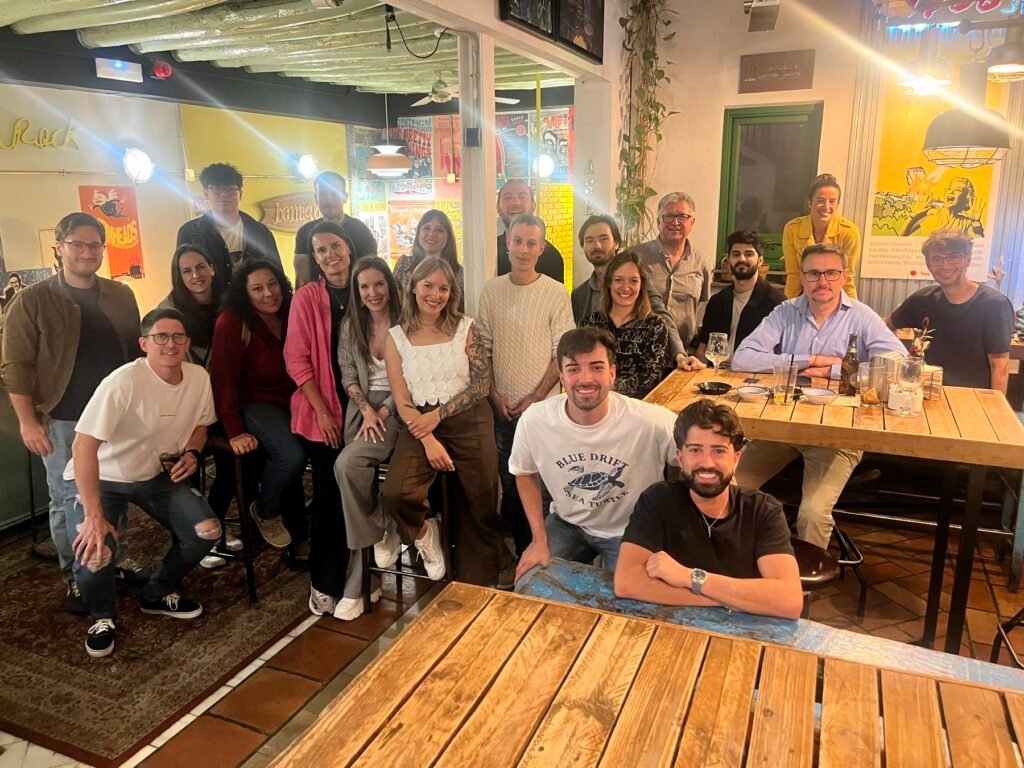
Then came Raúl, a technical architect dreaming of his own project. Kasia, a photographer who had just gone all in on her business. Tommy, who worked at a startup. And many others. All evening I heard the same thing: they’d struggled to find people with a similar mindset.
Granada had plenty of entrepreneurial talent. Many of us simply hadn’t found each other yet.
And if you’ve read my sheUnit story, you might recognise a slightly suspicious pattern: every time I struggle to find my people, I end up creating an organisation.
Hosting, not just organising
Publishing an event is the easy part. Getting the right people into a room, making them feel comfortable and giving them a reason to return is the real work.
I invited people personally through LinkedIn and Instagram, negotiated with venues, created the content and collected feedback. And at every event, I welcomed people, introduced strangers to each other and kept an eye on whoever was standing alone. I’ve been that person scanning the room and pretending to check something important on my phone.
I wanted people to feel they belonged before they had even figured out where to sit.
My offline validation lab
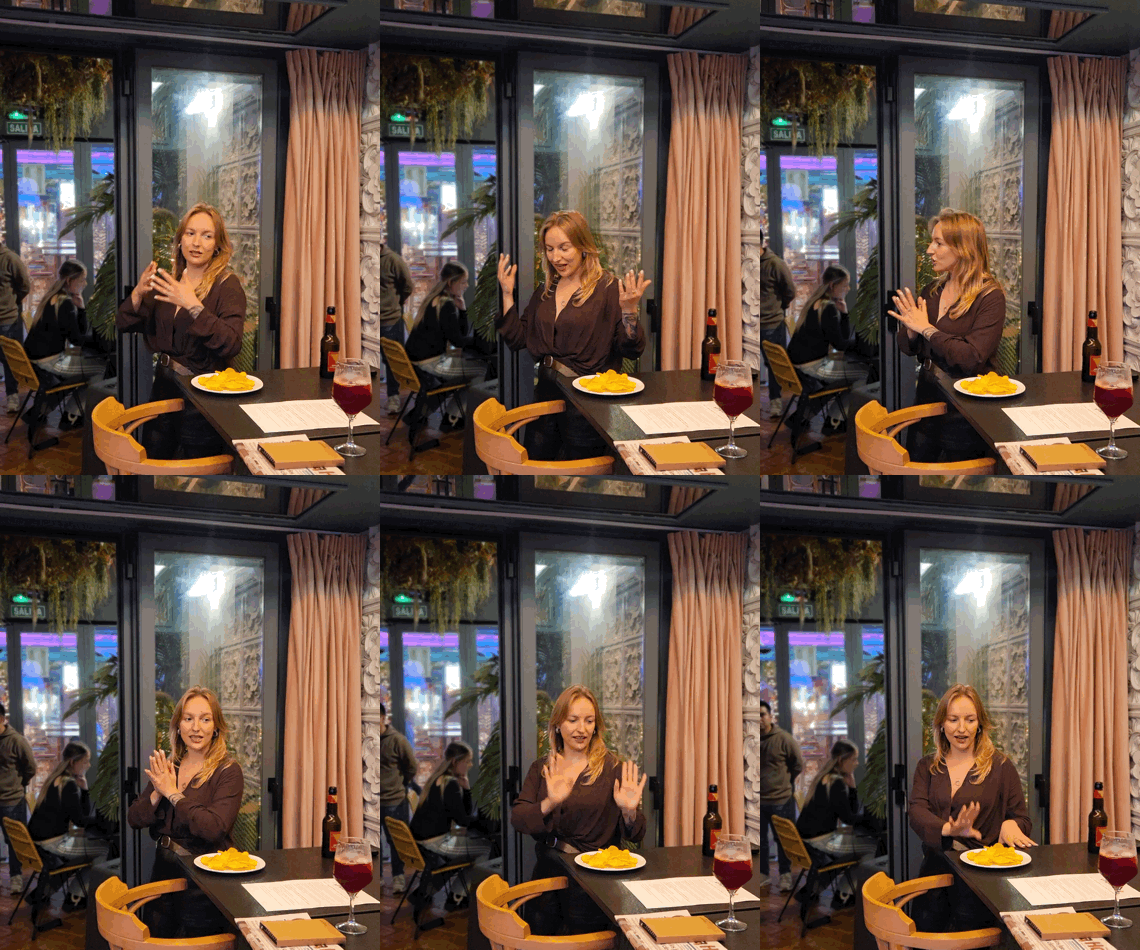
Over the following months, Emprendea became my testing ground. La Tapa Emprendedora for informal gatherings, El Café Emprendedor for smaller conversations, workshops for practical knowledge, and even a painting-and-wine evening, because good relationships don’t always start with business.
Behind every event there was an experiment: what makes people come, what makes them return, which formats create real connections and what people are genuinely willing to pay for. Some ideas worked. Some sounded brilliant in my head and much less brilliant in reality. That’s exactly why we test things before investing in them.
In November 2026, I launched SOS Emprendedor. Participants told me their challenges in advance, and I grouped them around shared problems. Twenty-three people spent the evening solving real problems together instead of listening to presentations.
The expertise was already sitting around the tables. My job was to design the room where it could be shared.
The business model I decided against
To make Emprendea sustainable, my first instinct, after years in SaaS, was a monthly membership. Recurring revenue, predictable income, an engaged community. On paper, lovely.
But Granada has its own economic reality. Many of the people I wanted to support were freelancers and early-stage founders, and for some of them even €10 for an event was a real decision. A subscription would have slowly pushed Emprendea towards only those who could comfortably afford it.
So I dropped it. Subscriptions can be a great model. For this mission, in this city, I no longer believed it was the right one.
Being emotionally attached to a business model just because you’ve already invested time in it is a rather expensive hobby.
November 2026: time for a pivot
Meanwhile, new entrepreneurial communities kept appearing in Granada. I could have competed for the same thirty people in the same restaurant on a Tuesday evening. I started asking a different question instead.
What if Granada needs stronger connections between the communities, institutions, businesses and initiatives that already exist, rather than another community?
So Emprendea is becoming what its name always suggested: an actual hub. The community stays, but the focus shifts to projects created with businesses, universities and public institutions: entrepreneurship programmes, support for early-stage founders, workshops on real challenges and initiatives that connect local and international talent.
After years of advising businesses on strategy, here I am doing the same with my own venture. And discovering, once again, that strategic decisions are much harder when it’s your own baby.
Still figuring it out, on purpose
Emprendea brings together almost everything I’ve learned: relationship-driven business development from PushPushGo, community building from sheUnit, the hard lessons of Mistishop, sustainable social impact from Social Movers Hub and the commercial strategy of Mirumee.
I’m also approaching it differently. I challenge my own assumptions more, I’m less attached to individual ideas, more careful with my capacity and comfortable changing direction when the evidence says so.
The mission remains. The strategy evolves.
Curious to see whether I can actually pull this off?
Follow @emprendea.hub on Instagram to see how it goes.
No success story guaranteed. Plenty of lessons along the way.